Most people think recovery is something that only applies to training.
Hard workout = need recovery
Easy day = no recovery needed
But that’s not how the body works.
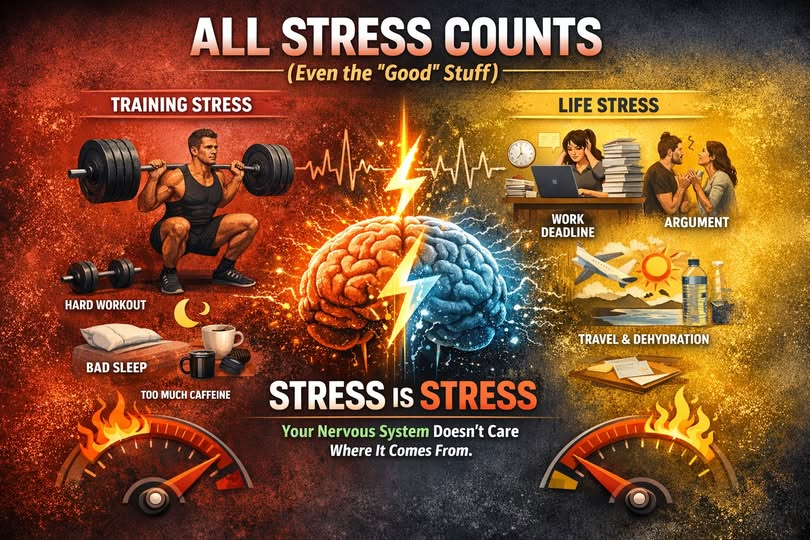
Your nervous system doesn’t categorize stress as:
• Physical vs mental
• Training vs life
• Good vs bad
It simply detects load.
To the autonomic nervous system, all of the following register as stress:
• A heavy squat session
• A poor night of sleep
• A work deadline or long meeting
• An emotional conversation or argument
• Excess caffeine or stimulants
• Travel, heat, dehydration
They all pull on the same system.
You don’t consciously control it — but it is constantly adjusting based on what it senses.
This is why someone can:
• Train less
• Eat well
• “Feel fine”
And still show signs of increased stress physiologically.
From the body’s perspective, it doesn’t matter where the stress came from. It only matters how much is present and whether it’s being resolved.
This is also why “good” stress still counts.
Training stress is necessary for adaptation.
Mental stress can sharpen focus.
Even excitement increases sympathetic activity.
But none of that becomes beneficial unless the system is allowed to downshift afterward.
When HRV trends downward or recovery scores remain suppressed, it often means:
The body is spending too much time in a heightened state — even if you aren’t consciously aware of it.
That’s why platforms like Morpheus focus on physiology, not just workouts.
Because your nervous system doesn’t respond to intention.
It responds to total load.