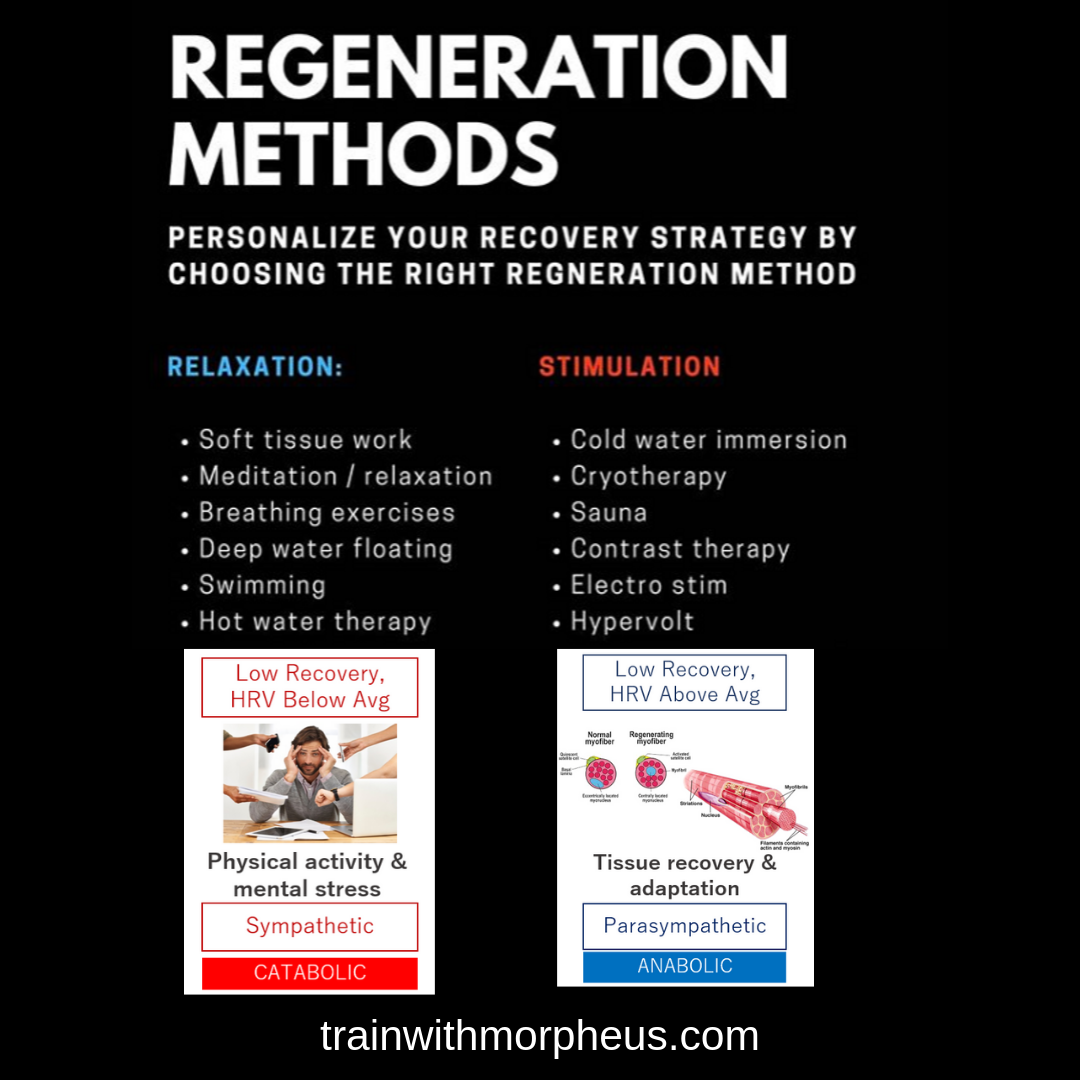
One of the biggest mistakes people make with recovery is assuming that more calming is always better.
It isn’t.
Recovery isn’t about doing relaxing things.
It’s about doing the right type of recovery for the nervous system state you’re actually in.
HRV gives us insight into that state.
When HRV is much lower than your average (or trending down)
This usually indicates that the nervous system is spending too much time in a sympathetic-dominant state — the “gas pedal.”
This doesn’t always feel like panic or anxiety.
Often it shows up as:
Elevated resting heart rate
Poor sleep quality
Feeling wired but tired
Reduced stress tolerance
Slower recovery from training
In this state, the system needs parasympathetic support — not more stimulation.
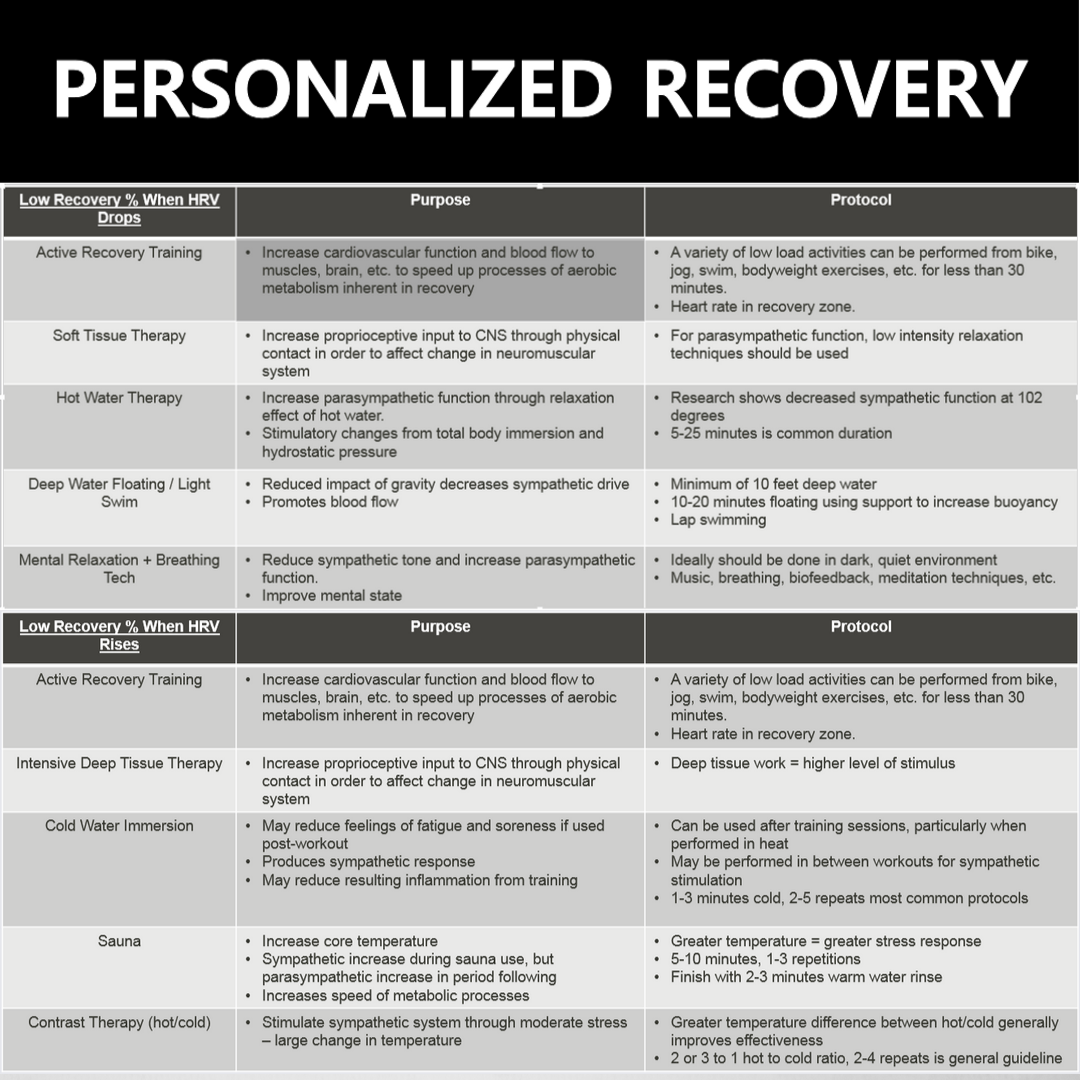
Effective parasympathetic recovery strategies include:
Low-intensity movement (easy walking, light mobility)
Nasal breathing and slow exhales
Extended warm-ups and cooldowns
Gentle stretching (not aggressive)
Time outdoors without performance intent
Consistent sleep and meal timing
The goal here is simple:
Help the system downshift and restore balance.
Trying to “push through” or stack more intensity when HRV is suppressed usually just extends the recovery hole.
When HRV is much higher than your average
This is where people often get it wrong.
A higher-than-average HRV does not automatically mean you’re fully recovered.
In many cases, a sudden HRV spike reflects parasympathetic dominance — the nervous system is slamming the brakes to recover from a prior stressor.
Common situations where this happens:
After a block of hard training
Following poor sleep or illness
During accumulated fatigue
After prolonged life stress
In this state, piling on more passive recovery can actually slow normalization.
What often helps instead is light sympathetic activation.
Effective sympathetic recovery strategies include:
Short, low-dose intensity (strides, short pickups, light intervals)
Slightly higher-tempo aerobic work (still controlled)
Strength work with low volume and intent
Cold exposure (brief, not prolonged)
Morning light exposure and movement
The goal isn’t to add stress.
It’s to nudge the system back toward balance.
Think of it as gently re-engaging the gas pedal so the system doesn’t stay stuck on the brakes.
Recovery is not one-size-fits-all
Your nervous system doesn’t need the same recovery input every day.
Low HRV → downshift, reduce load, restore
High HRV → re-engage, normalize, stabilize
This is why blindly following recovery routines without context often backfires.
The body doesn’t respond to intentions.
It responds to inputs.
And the better those inputs match your current physiology, the faster and more reliably recovery actually happens.
That’s the difference between doing recovery and recovering.