
Not all training stresses the cardiovascular system in the same way.
A long aerobic session and a heavy strength workout can both be “hard” — but they challenge the heart through different mechanisms, and that leads to different adaptations.
Understanding this helps explain:
Why HRV responds differently
Why resting HR can behave differently
And why heart rate zones don’t apply well to strength training
Two Main Types of Cardiac Load
The heart responds primarily to two kinds of stress:
1️⃣ Volume Load (Cardio / Conditioning)
Seen in activities like running, cycling, rowing, swimming.
Characteristics:
Sustained elevated heart rate
Large volume of blood returning to the heart
Prolonged oxygen demand
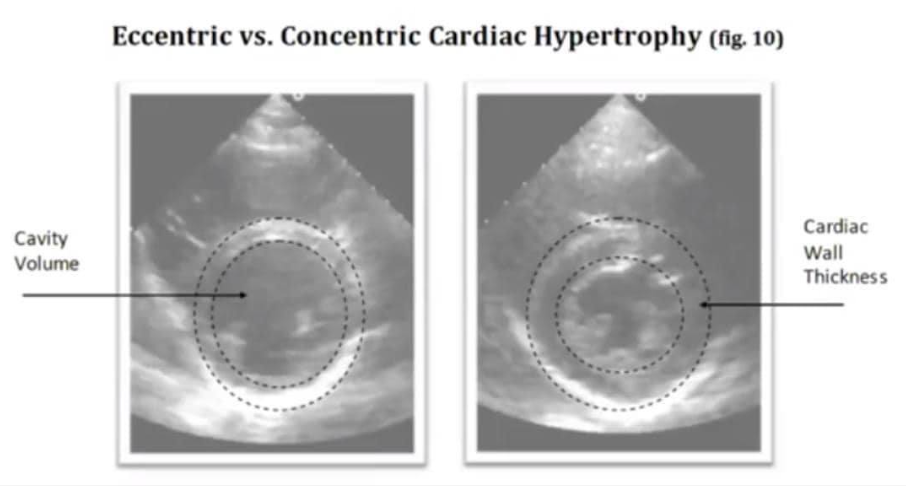
This leads to eccentric hypertrophy of the heart:
The left ventricle enlarges
Chamber size increases/stretches
The heart pumps more blood per beat (higher stroke volume)
This is the classic “aerobic athlete’s heart.”
2️⃣ Pressure Load (Strength Training)
Seen in heavy lifting, especially compound movements and high-force efforts.
Characteristics:
Short bursts of intense effort
Large spikes in blood pressure
Increased intrathoracic pressure during lifts
This leads more toward concentric hypertrophy:
The heart muscle wall thickens
The chamber size may not increase much
The heart adapts to handle higher pressure demands
This is a different kind of adaptation — not better or worse, just different.
Why Heart Rate Behaves Differently
In cardio training:
HR stays elevated for long periods
HR closely reflects metabolic demand
HR zones map reasonably well to training intensity
In strength training:
HR may spike briefly but isn’t sustained
Blood pressure load is high even when HR isn’t
Neural drive and muscular force matter more than HR
You can be under significant cardiovascular and nervous system stress during lifting — even if your heart rate never enters a traditional “training zone.”
Why Heart Rate Zones Don’t Work for Strength Training
Heart rate zones are based on metabolic intensity and oxygen demand.
But strength training stress comes more from:
Pressure load
Neural demand
Mechanical tension
HR may underestimate or overestimate how stressful a lift is because:
The effort is brief
Rest periods are longer
Blood pressure spikes
HR drops between sets
That’s why using heart rate zones to guide strength training intensity doesn’t make sense physiologically.
The heart is still under load — just in a way HR doesn’t fully capture.
Implications for HRV and Recovery
Because strength and cardio stress the heart differently:
HRV responses may differ after lifting vs cardio
Resting HR may rise even if HR during the session wasn’t high
Nervous system fatigue may be high without prolonged elevated HR
A heavy strength session can suppress HRV due to pressure load and neural stress — even though it didn’t look “cardio hard.”
Context is everything.
The Big Takeaway
Cardio training challenges the heart through volume, leading to eccentric adaptations.
Strength training challenges the heart through pressure, leading toward concentric adaptations.
Both are real cardiovascular stress — but they show up differently in heart rate and recovery metrics.
Heart rate zones work well for aerobic training.
They do not translate cleanly to strength work.
That's why there are no heart rate zones for strength training with the Morpheus app.
Interpreting recovery requires understanding the type of stress, not just how high your heart rate went.