
Your M7 transmitter is built to last for years.
Your strap, however, is a wearable part — and like any piece of athletic gear, it naturally wears down over time.
This is completely normal and expected.
Understanding when and why straps wear out helps you avoid frustration and keep your heart rate data accurate.
Why Straps Don’t Last Forever
The strap contains soft electrodes that detect your heart’s electrical signal. Those materials are exposed to sweat, stretching, and washing — all of which slowly break them down.
Here are the main causes of wear:
Sweat & Salt
Every workout exposes the strap to sweat. Sweat contains salt, which gradually degrades the electrode surfaces and makes it harder for the strap to detect your heart rate.
Stretching Over Time
The elastic band stretches slightly every time you wear it. After months of use, it may not sit as snugly, and a loose strap means weaker skin contact and a weaker signal.
Build-Up on the Electrodes
Skin oils, lotions, and detergent residue can build up over time. This creates a barrier between your skin and the electrodes, interfering with signal quality.
Washing & General Wear
Washing helps keep the strap clean, but every wash slightly wears down the materials — especially if machine-washed or exposed to harsh detergents.
General Strap Replacement Guidelines
How often you should replace your strap depends on how frequently you use it.
| Usage Level | Recommended Replacement |
|---|---|
| Heavy use (4–7 days/week) | Every 6 months |
| Moderate use (2–4 days/week) | Every 9–12 months |
| Light use (1–2 days/week) | Every 12–18 months |
These are general ranges. Some straps last longer with great care, while others may wear out sooner with heavy sweat or frequent washing.
Signs It’s Time to Replace Your Strap
If you notice any of the following, the strap is likely worn out:
✅ Heart rate spikes, drops, or jumps suddenly (example: 70 → 180 → 90)
✅ Takes a long time to pick up your heart rate at the start of a workout
✅ You have to excessively wet the electrodes just to get a signal
✅ Connectivity becomes unstable (but the transmitter battery is fine)
✅ Visible wear, cracking, or fraying on the electrode areas
If cleaning no longer fixes the issue, replacement is the next step.
How to Extend the Life of Your Strap
Good care can often add several extra months of life to your strap.
• Rinse the strap after every workout (salt breaks down electrodes)
• Hand-wash weekly with mild soap
• Avoid machine washing and harsh detergents
• Remove the transmitter immediately after use
• Let the strap air-dry completely before storing
Consistent cleaning slows down wear — but it can’t stop it forever.
Ordering a Replacement or Extra Strap
Click here to purchase replacement straps
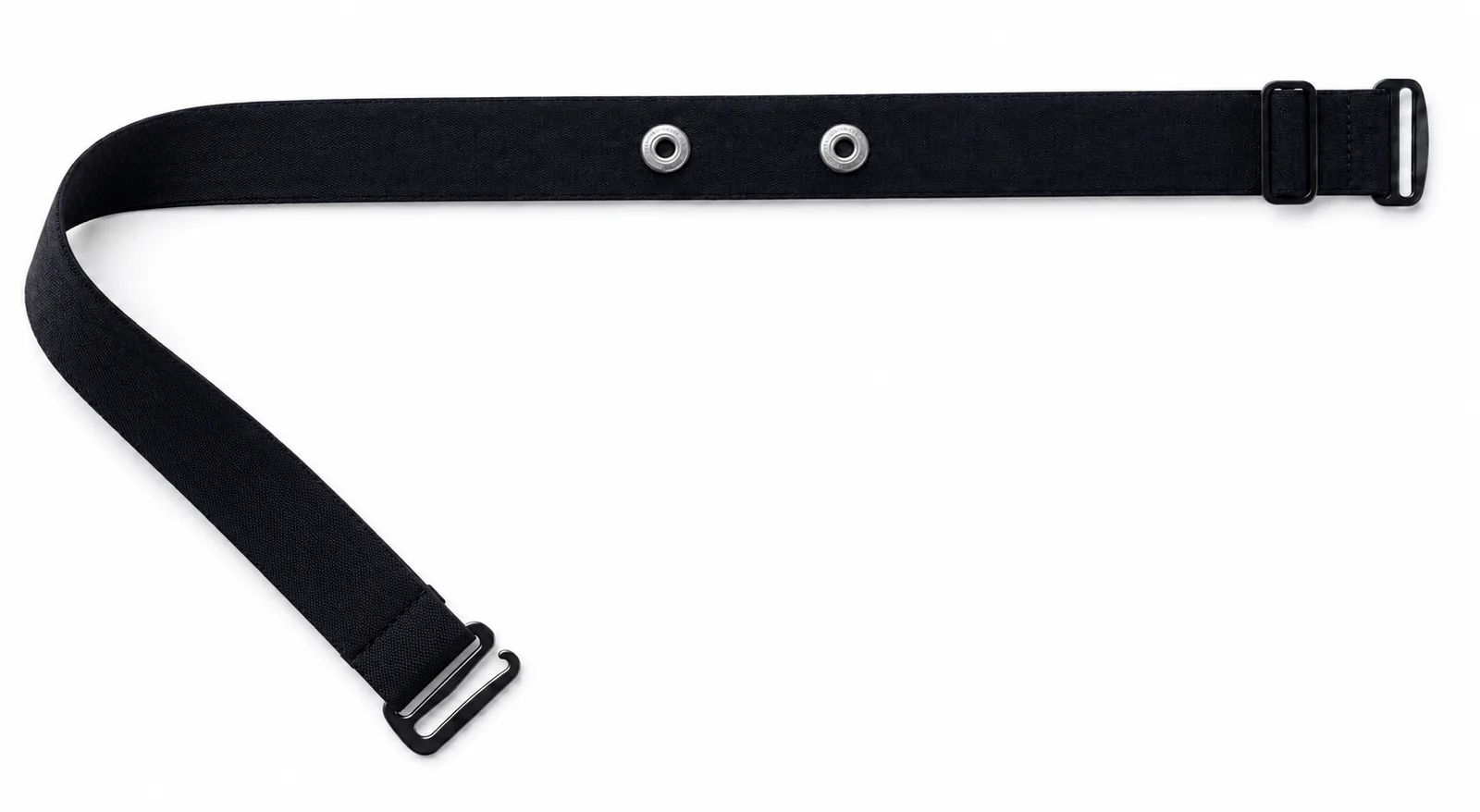
Straps come in two sizes (XS-S and M-XXL):
Wearable size XS-S: 20″–28″ (51–71 cm)
Max stretch fit: 30″ (76 cm)
Wearable size M-XXL: 24″–36″ (61–92 cm)
Max stretch fit: 60″ (153 cm)
Good News: Straps Are Universal
Chest strap systems are very standardized.
That means many third-party snap-style straps will also work with the M7 transmitter.
You are not required to use the Morpheus strap — though we recommend choosing a high-quality replacement for best signal reliability.
Bottom Line
Straps are wearable equipment — just like shoes or tires.
They work great, until normal use slowly wears them down.
If readings get unreliable and cleaning doesn’t help, it’s probably time for a fresh strap — not a new device.