
When people see their HRV trending down during a hard training block, they often think:
“I need to push through.”
“I don’t want to lose fitness.”
But one of the most powerful tools for long-term progress is the deload week — a planned reduction in training stress.
Deloads don’t slow progress.
They’re often what allows progress to finally show up.
Accumulated Fatigue vs Fitness
Training creates two things at the same time:
1️⃣ Fitness — positive adaptations
2️⃣ Fatigue — temporary performance suppression
During a hard training phase, both increase.
But fatigue often masks fitness.
That’s why you might feel:
Heavier
Slower
More tired
Even though you’re actually getting fitter underneath.
HRV often trends downward during these phases because the nervous system is carrying a higher load.
What a Deload or Maintenance Week Actually Does
A deload week reduces training volume and/or intensity, giving the body space to recover from accumulated fatigue.
This allows:
Nervous system balance to restore
Muscle repair to catch up
Hormonal stress to decrease
HRV to rebound
As fatigue drops, the fitness you built becomes more visible and usable.
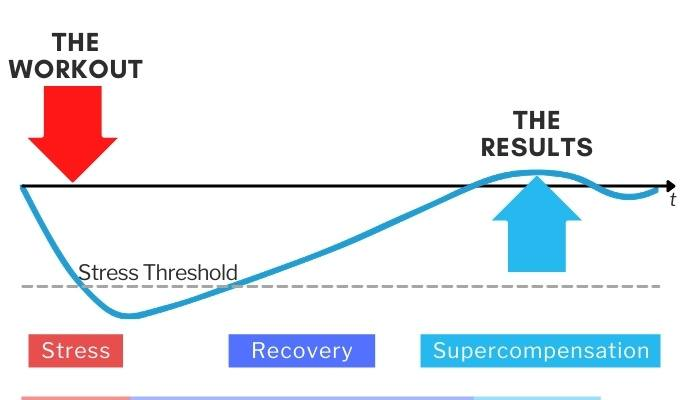
Supercompensation: The Rebound Effect
When stress is followed by adequate recovery, the body doesn’t just return to baseline.
It rebounds above it. This is called supercompensation.
This is where:
Strength jumps
Endurance improves
HRV stabilizes or trends upward
Recovery between sessions gets easier
Without recovery, supercompensation can’t happen.
Stress alone doesn’t create improvement.
Stress + recovery does.
Why These Weeks Are Productive — Not Lazy
Deload or maintenance weeks often feel easier, which makes people think they’re “losing ground.”
In reality, these weeks:
Solidify adaptations from previous training
Reset nervous system stress
Improve long-term HRV trends
Prepare the body for the next hard block
Skipping deloads often leads to:
Chronic HRV suppression
Plateaus
Higher injury risk
Burnout
Deloads protect consistency — and consistency builds fitness.
HRV and the Bigger Picture
If HRV stays suppressed for weeks without rebound, it usually means recovery isn’t matching stress.
A deload allows HRV to:
Recover
Stabilize
Support the next phase of training
Long-term progress isn’t about keeping HRV high every day.
It’s about allowing dips when stress is applied — and rebounds when recovery is prioritized.
The Big Takeaway
Deload or maintenance weeks are not a break from progress.
They are part of progress.
Training builds fatigue and fitness.
Recovery removes fatigue and reveals fitness.
When you allow space for recovery, HRV trends often improve over time — not because you trained less, but because you trained smarter.
Recovery weeks aren’t lazy.
They’re how you turn hard work into real results.