
It’s easy to get emotionally attached to a single recovery score.
Green feels great.
Amber or Red feels frustrating.
But your body is not a day-to-day machine — it’s a system that adapts over time. That’s why weekly trends and averages tell a much more accurate story than any single day ever can.
One data point is noise. Patterns are signal.
Biology Doesn’t Operate in 24-Hour Snapshots
Your nervous system, muscles, hormones, and immune system all work on overlapping timelines.
A single night of poor sleep…
A stressful meeting…
A tough workout…
Any of these can temporarily nudge HRV up or down. That doesn’t automatically mean your recovery is “bad” or your training is “off.”
It just means your system responded to something in the last 24 hours.
Adaptation happens when stress and recovery balance out over weeks, not days.
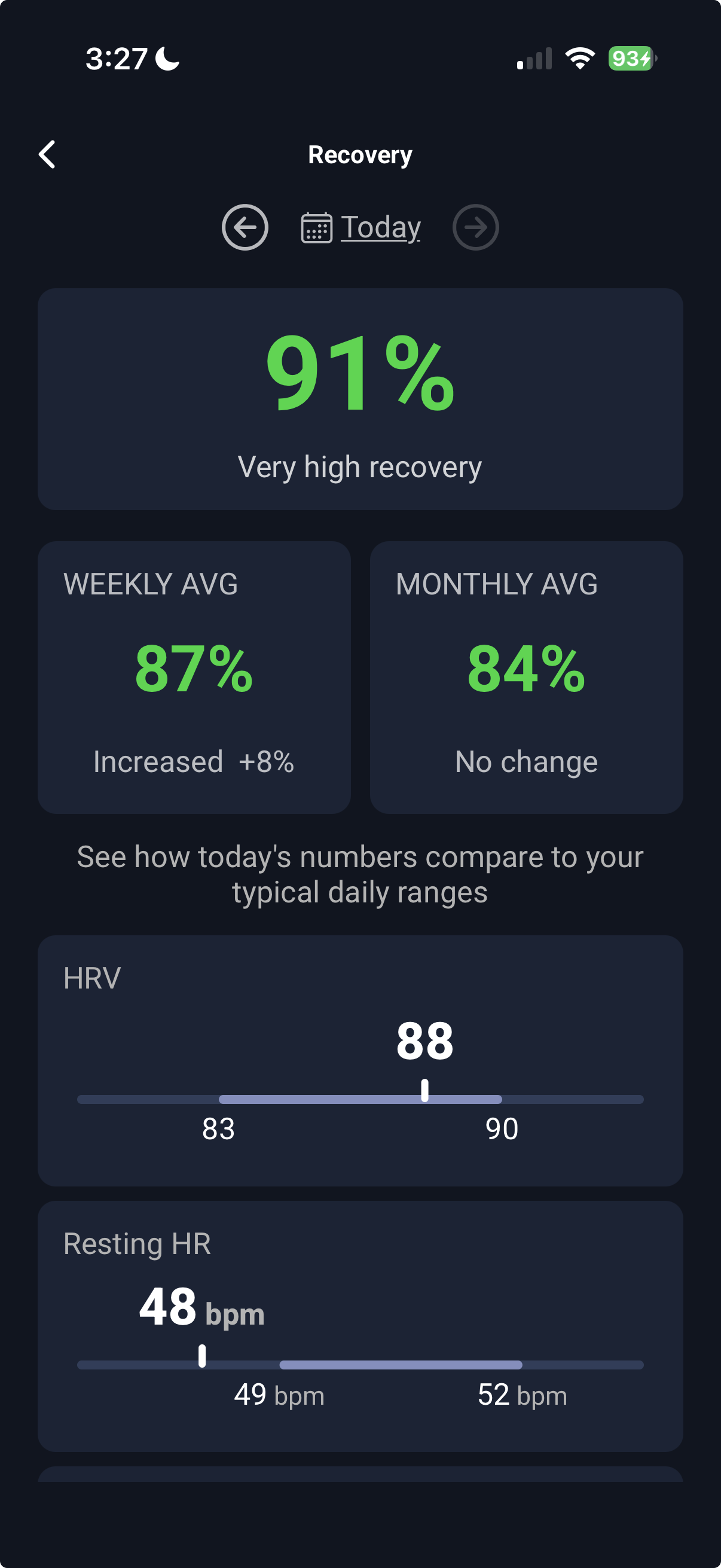
Noise vs Signal
Daily recovery scores naturally fluctuate because life fluctuates.
Short-term dips or spikes can be caused by:
• Travel
• Dehydration
• Late meals
• Emotional stress
• Minor sleep changes
These create noise — short-term variation that doesn’t necessarily reflect your overall recovery capacity.
When you look at weekly averages, you start to see the signal:
• Is recovery generally trending down?
• Staying stable?
• Gradually improving?
That’s what matters for long-term training decisions.
Why Reacting to Single Days Can Backfire
If you drastically change training based on one low score, you risk:
• Undertraining from over-caution
• Missing valuable stimulus
• Over-correcting a normal fluctuation
Likewise, pushing extra hard on a single green day when your weekly trend is poor can dig a deeper recovery hole.
The goal is not to obey one day — it’s to interpret patterns.
How Weekly Averages Reflect True Load
Your weekly recovery trend reflects the combined effect of:
• Training stress
• Life stress
• Sleep patterns
• Nutrition
• Overall workload
If your average recovery is drifting downward across a week or two, that suggests total stress is outpacing recovery.
If your weekly average stays steady while training increases, that suggests improved capacity.
Those are meaningful signals.
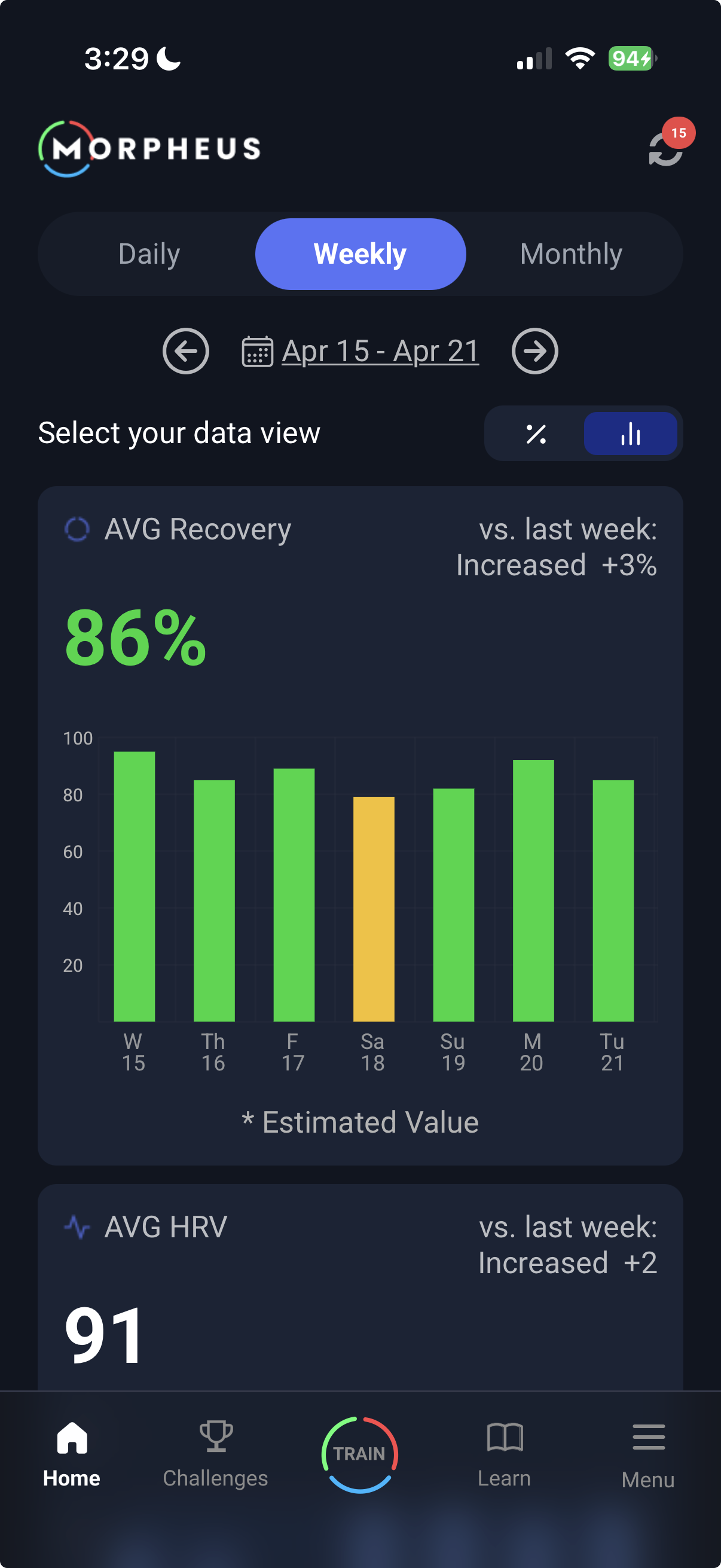
How Morpheus Weekly Targets Account for This
Morpheus doesn’t just look at one day. It’s built around the idea that:
• Stress and recovery must balance across the week
• Training zones should align with overall recovery trends
Weekly zone targets help distribute stress appropriately so that:
• Hard days are supported by easier ones
• Total load stays within your recovery capacity
This approach respects biology — not calendar days.
When Single Days Do Matter
Single-day scores aren’t useless. They’re just not the whole story.
They’re most helpful when:
• There’s a sudden, large change from your norm
• You feel noticeably off
• Other stressors are present (illness, travel, poor sleep)
In those cases, a daily score can flag a short-term adjustment. But big picture decisions still come from trends.
The Big Takeaway
Your body adapts over time, not overnight.
Single-day recovery scores are pieces of information. Weekly trends show the direction your system is moving.
The smartest training decisions come from watching patterns, not reacting emotionally to one number.
Zoom out, and the data becomes much more useful.