
Dynamic HR zones adjust to your body — they aren’t a shortcut.
One of the powerful features of Morpheus is that your heart rate zones adjust based on your daily recovery score.
On low-recovery days, your zones shift downward.
That means the heart rate required to reach Green or Red is lower than on a well-recovered day.
Some people see this and think:
“Perfect — I can still hit my weekly Green or Red zone targets, and it’ll feel easier.”
But that misses the whole point of recovery-based training.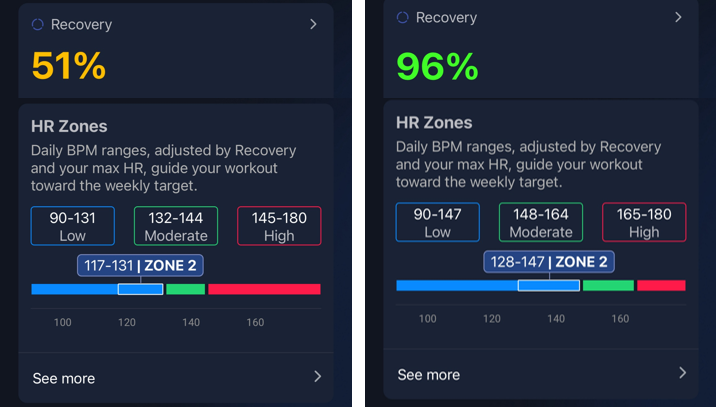
Dynamic Zones Are a Safety System, Not a Loophole
When your recovery score is low, your nervous system and physiology are under higher stress or are trying hard to recover from stress.
That stress might come from:
• Hard training
• Poor sleep
• Life stress
• Illness
• Travel
• Inflammation
Lower zones are your body’s way of saying:
“I can still train — but the stress cost of intensity is higher today.”
The zones move down to protect your recovery, not to make it easier to accumulate hard-zone minutes.
“Easier Heart Rate” Does Not Mean “Lower Stress Cost”
On a low-recovery day:
• Your sympathetic system is already activated or your parasympathetic system is working hard to help you recover
• HRV is suppressed well below avg or has risen well above avg
• Recovery capacity is reduced
Even though you can hit Green or Red at a lower heart rate, the relative stress to your system is still high.
You aren’t tricking your physiology.
You’re just applying more load to a system that’s already strained.
That can lead to:
• Slower recovery
• Stagnation
• Compounding fatigue
• Suppressed HRV trends over time
Weekly Zone Targets Assume You Respect Recovery
Morpheus weekly training zone targets are built around a balance of:
• Blue (low stress, aerobic foundation, recovery-supportive work)
• Green (aerobic/glycolytic development)
• Red (max aerobic stress, anaerobic development)
But those targets assume you are distributing stress intelligently across recovery states.
If you pile Green or Red time onto days when recovery is low:
• You stack stress on top of stress
• The nervous system never fully downshifts
• Blue days stop doing their job
That’s how people end up training hard all the time — even when they think they’re being “data-driven.”
Low-Recovery Days Are Not Intensity Opportunities
A low recovery score means:
Your body is already dealing with a higher internal load.
That day is better used for:
• Blue zone aerobic work
• Light movement
• Mobility
• Skill practice
• Or full recovery
These support parasympathetic activity and help restore balance so that your next Green or Red session actually produces adaptation.
Training Is About Timing, Not Just Totals
Fitness improves when stress is:
Applied → absorbed → recovered from
If you apply high stress on a day your body can’t absorb it, the result is just more fatigue.
Green and Red zone time is valuable —
but only when your system has the capacity to benefit from it.
The Big Takeaway
Dynamic zones aren’t there to make hard work easier on bad days.
They’re there to scale stress to match your recovery capacity.
Chasing Green or Red time just because the numbers are lower defeats the purpose of recovery-based training.
Use low-recovery days to build your foundation.
Use high-recovery days to push performance.
That’s how weekly targets actually drive long-term progress — instead of long-term fatigue.