
Many people assume a good training week should come with consistently high recovery scores.
Green every day feels like success. Amber or red can feel like failure.
But that is not how human physiology works.
A normal, healthy training week includes variation in recovery. In fact, some fluctuation is a sign that your body is being challenged and adapting.
Recovery Is Meant to Fluctuate
Training is stress. Stress temporarily lowers recovery.
Sleep, nutrition, and lighter days allow recovery to rise again.
This natural up-and-down pattern is how adaptation happens. If recovery never dips, training stress may be too low to drive meaningful progress.
What a Healthy Week Often Looks Like
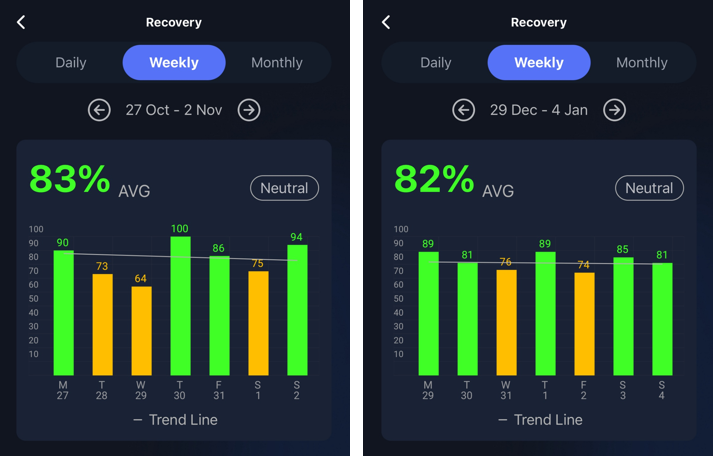
While everyone’s numbers are personal, many people see patterns like this over a typical training week.
| Day Type | Typical Recovery Pattern | What It Means |
|---|---|---|
After a hard session | Recovery often dips | Normal response to training stress |
Following a lighter or zone 2 day | Recovery often rebounds | System is absorbing training and restoring balance |
After poor sleep or high life stress | Recovery may drop unexpectedly | Non-training stress is affecting your system |
After several balanced days | Recovery stabilizes | Stress and recovery are in a healthy rhythm |
Variation Is Not a Problem to Fix
Seeing recovery drop after a tough workout does not mean you did something wrong. It means your body is responding to load.
Seeing recovery bounce back after a lighter day is a good sign. It shows your system can handle the stress you are applying.
The goal is not to keep recovery high every day. The goal is to see recovery dip and rebound in a predictable rhythm.
When Weekly Patterns Are a Good Sign
A productive training week often includes:
At least one or two days where recovery is lower after harder sessions
One or more days where recovery rises again after easier work
No long stretches where recovery stays suppressed without improvement
You want to have a weekly average recovery score in the low 80% range (ie 81-85%). This pattern shows your system is being challenged and then given space to adapt.
When Weekly Patterns Suggest Adjustment
A week may need adjustment when you see:
Recovery staying low for most of the week
Recovery not rebounding after easier days
Performance feeling flat alongside suppressed recovery
Rising resting heart rate with falling HRV across several days
This usually suggests total stress, from training and life combined, is exceeding your current recovery capacity.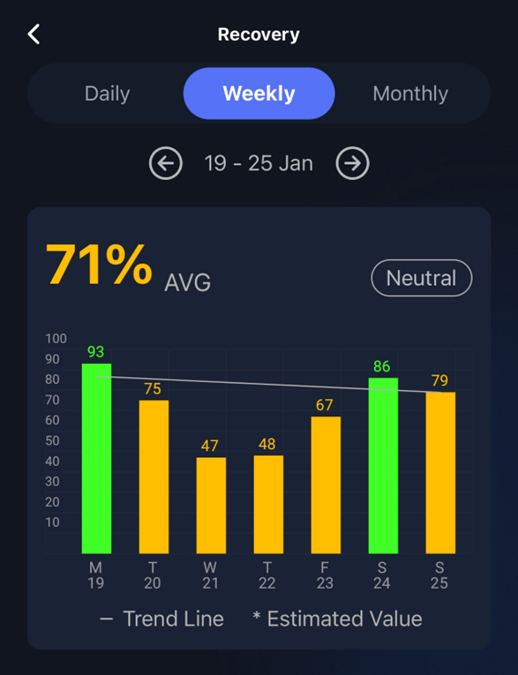
Why Chasing Constant High Recovery Can Backfire
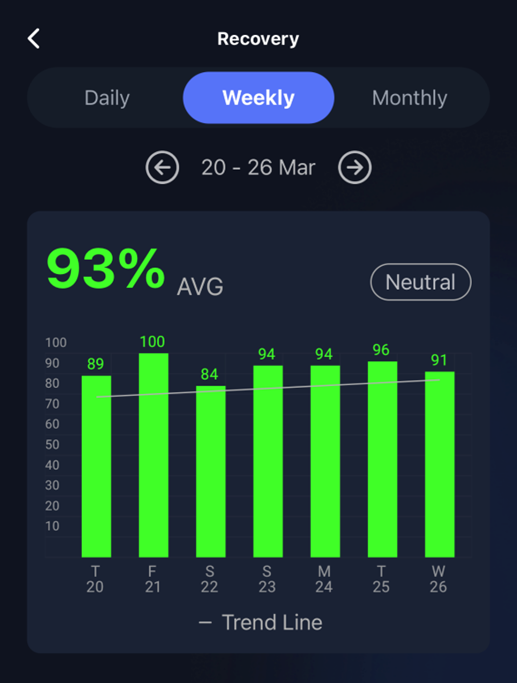
If recovery is always very high and never dips, it may mean:
Training intensity is too low
Volume is not high enough to drive adaptation
You are staying too comfortable
Some stress is required for progress. The key is managing the rhythm, not eliminating the dips.
The Big Takeaway
A normal week of recovery scores includes ups and downs.
Dips after hard sessions are expected. Rebounds after lighter days are a good sign. What matters most is the overall rhythm, not any single day.
Learning to expect this variation helps you train with more confidence and less emotional reaction to individual recovery scores.