
Many fitness watches, apps (including Morpheus), and platforms show Calories (kCal) burned during or after a workout. The number looks precise. Sometimes it even changes in real time.
But no wearable or app can truly know how many Calories you burned in a session. These numbers are estimates based on general models, not direct measurements of your body’s energy use.
Understanding why helps you use these numbers wisely — and stop judging workouts based on them.
Calories Burned Has Become a Polarizing Fitness Metric
Calories burned used to be a background estimate. Now it is often treated as a scoreboard.
Some people feel proud when the number is high. Others feel guilty when it is low. Workouts sometimes get labeled as “good” or “bad” based on Calorie totals alone.
This has made calories burned a polarizing topic in fitness. Many people:
Choose workouts based on which burns the most Calories
Feel like a session “didn’t count” if the number is low
Push intensity mainly to increase the Calorie display
Obsess over daily totals instead of long-term progress
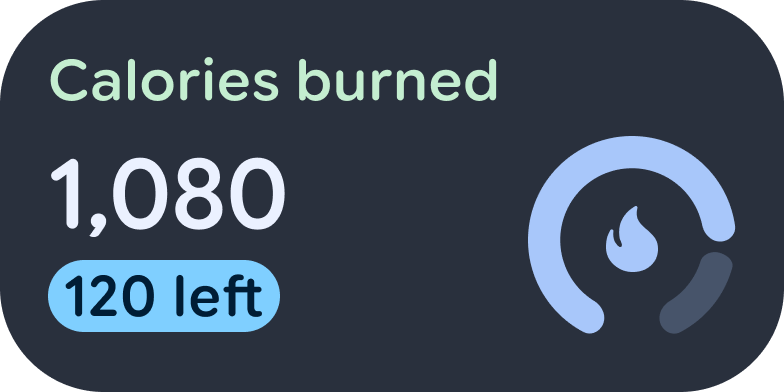 This mindset can lead to unnecessary stress, poor recovery decisions, and a misunderstanding of what actually drives fitness and health.
It's a "catch 22" for us at Morpheus. Because if we didn't show Calories burned, people would revolt. But because we do show it, we get many questions about its accuracy.
How Calories Burned Is Actually Measured in Physiology
In research and clinical settings, Calorie burn is not guessed from heart rate or movement alone. It is measured using metabolic testing, which looks at how much oxygen you use and how much carbon dioxide you produce.
This is called indirect calorimetry.
This is done via and exercise test that involves:
Wearing a mask or mouthpiece
Measuring the volume of air you breathe
Calculating oxygen consumption and carbon dioxide production
Estimating energy use from those gas exchange values
This is the gold standard because Calorie burn is directly tied to how much energy your cells are using, which is reflected in oxygen use.
Under "normal" conditions, we all burn approximately 5 Calories per minute per liter of oxygen consumed. So if you're exercising at an intensity at which you are using 2 liters of oxygen per minute, you will be burning approximately 10 Calories per minute. There are some physiological dependencies that go with this burn rate, as are noted in the sections below.
The % of those Calories burned are from Fat vs Carbohydrates depends on the amount of oxygen you are using relative to the amount of carbon dioxide you are producing. This is a metric called Respiratory Exchange Ratio (RER or RQ), and is often measured during indirect calorimetry metabolic testing.
Wearables do not measure your oxygen consumption directly. They use proxies.
How Devices Estimate Calories
Most devices estimate Calories using a combination of:
Heart rate
Movement data (accelerometers or GPS)
Your body weight
Age and sex
Sometimes pace, speed, or elevation
From this, they apply population-based formulas to estimate energy expenditure.
The problem is that these formulas assume:
Average fitness
Average movement efficiency
Average metabolic response
Real people vary widely from those averages.
Why Two People Can Burn Different Calories Doing the Same Workout
Even if two people have the same heart rate and do the same workout, their Calorie burn can be very different.
Factors that influence energy use include:
Training history
Movement efficiency and technique
Muscle mass
Metabolic health
Hydration status
Fatigue level
A well-trained person often uses less energy at a given workload than a less-trained person, even if heart rate looks similar.
Devices cannot fully account for these differences.
Stress, Recovery, and Calorie Burn
Your body does not burn Calories the same way every day.
Stress and recovery status influence:
Hormones that affect metabolism
Nervous system balance
Fuel use (fat vs carbohydrate)
Movement efficiency
When you are under-recovered or highly stressed, your body may:
Rely more heavily on carbohydrates
Be less efficient in movement
Experience higher heart rate at the same workload
This can change the relationship between heart rate and actual energy use, making device estimates even less accurate on those days.
Why “Calories Burned” Is Not a Measure of Workout Quality
It is easy to assume that more Calories burned means a better workout. That is not true.
Some of the most important adaptations come from sessions that do not burn huge numbers of Calories, such as:
Zone 2 aerobic training
Skill-focused strength sessions
Technique work
Mobility and recovery sessions
These sessions can build long-term fitness, improve HRV trends, and support recovery, even if the Calorie number is modest.
Chasing higher Calorie burn can push people toward excessive intensity, which may hurt recovery and long-term progress.
What Calorie Numbers Are Still Useful For
Calorie estimates are not useless. They can be helpful for:
Comparing similar workouts to each other
Getting a rough sense of total weekly activity
Seeing trends over time with the same device
But they are best used as relative, not absolute, information.
They should not be the main measure of how effective a workout was.
The Big Takeaway
True Calorie burn is measured by oxygen use and metabolic testing, not by heart rate or movement alone. Wearables estimate Calories using general formulas that cannot fully account for individual differences, efficiency, or daily changes in stress and recovery.
Because of this, Calorie numbers are always approximations. They do not define whether a workout was good or bad.
Fitness improves through the right type of stress, applied at the right time, with adequate recovery — not through chasing the highest Calorie total.