
The first step to improving your fitness and accelerating your recovery is installing the Morpheus Training app and creating your account.
Follow the instructions below to get started in just a couple of minutes.
Download the app
In the App Store (iOS) or Google Play store (Android), search for the Morpheus Training app. Or scan the appropriate QR code below to bring you directly to the app on the stores.
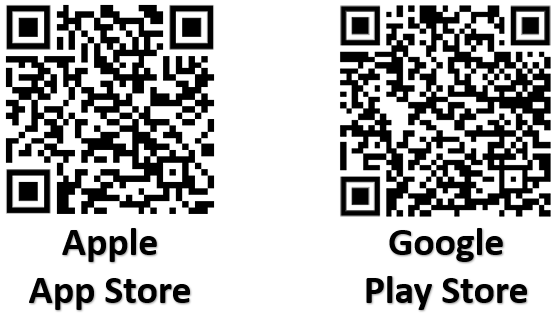
Download it to your phone.
Then you can create your app account.
Create your account
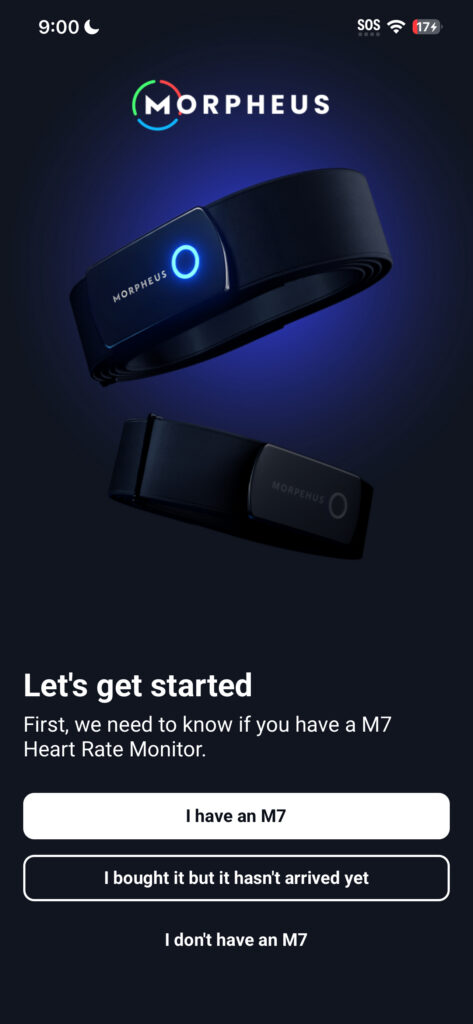
The first step is to let us know if you have a Morpheus M7 heart rate monitor or not.
Tap the appropriate button to continue.
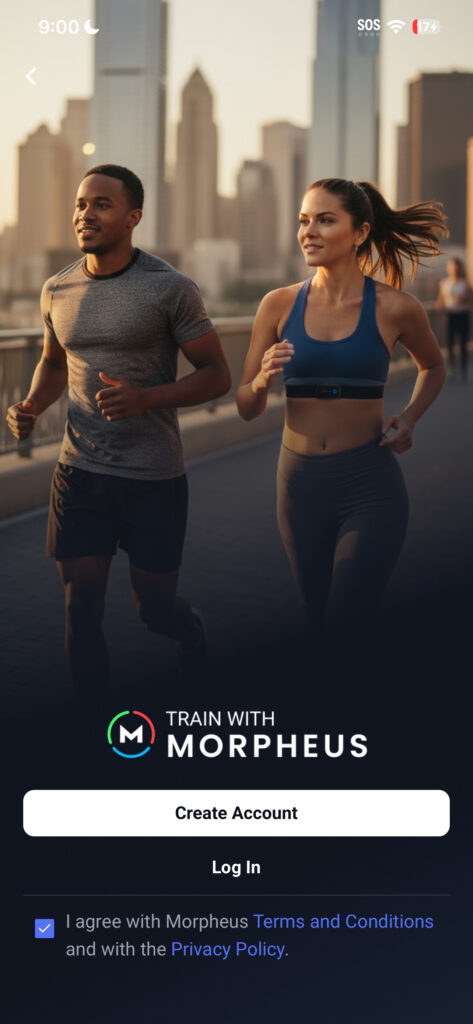
Tap on Create Account
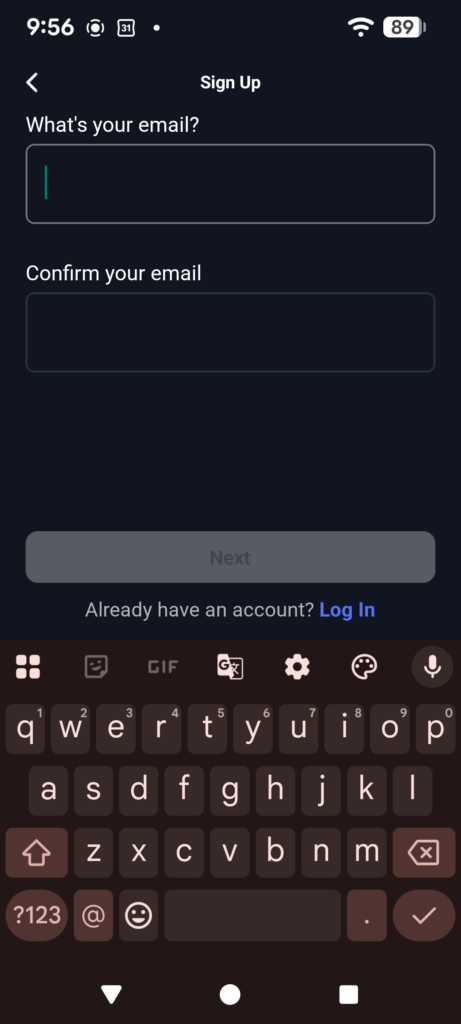
Enter your email address and then again to confirm your email. Tap Next when ready.
Enter a password and then enter it again to confirm it. Tap Next when ready.
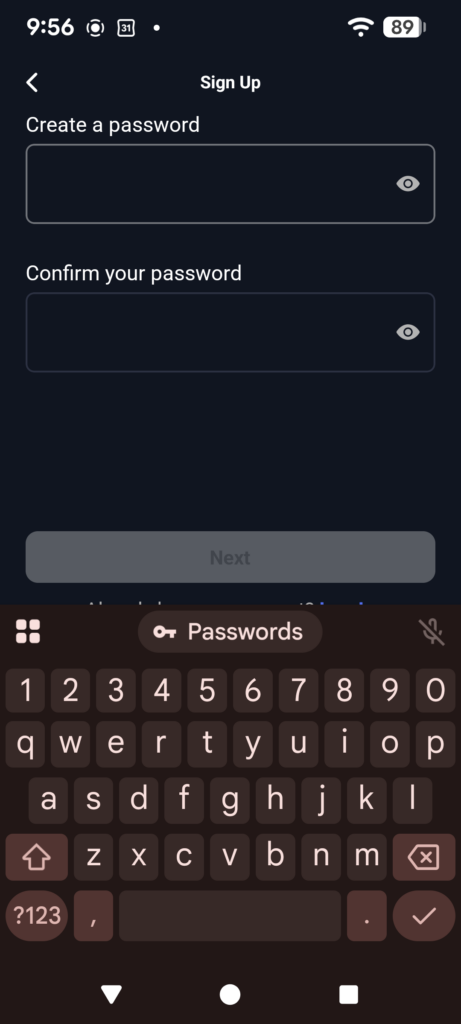
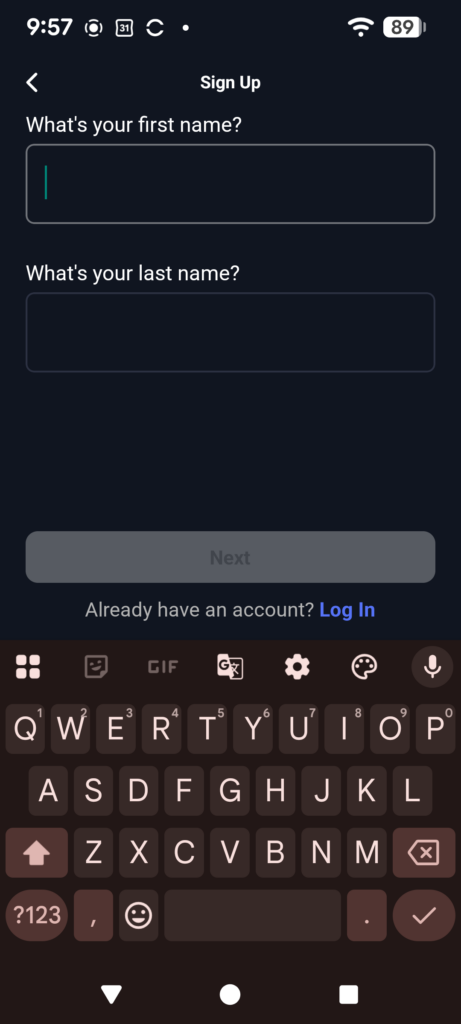
Enter your first name and last name and then tap Next.
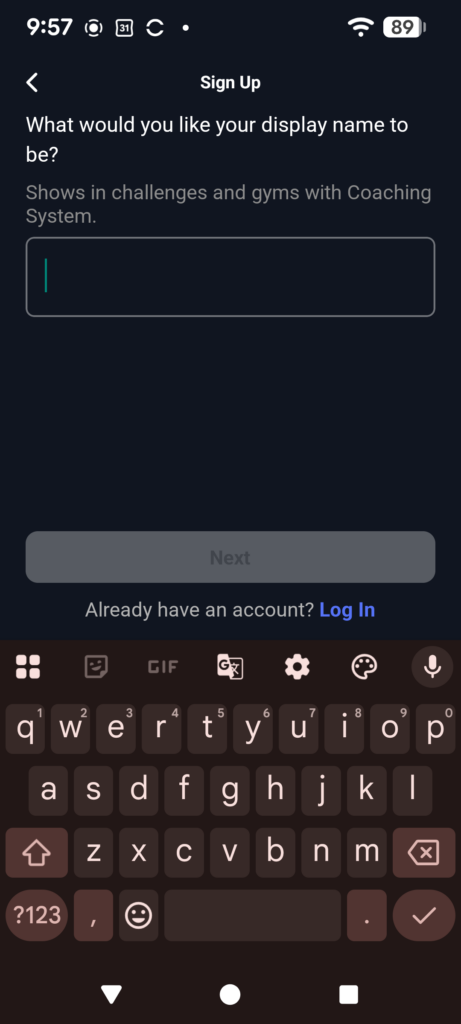
Enter a display name. Tap Next when ready.
Note: Your public “display name” will be shown to other Morpheus users in the Morpheus monthly challenges (if you join a challenge). This field needs to be unique – no two people can have the same display name – so add a little uniqueness to yours. If you enter the same display name as another person you will see a prompt to change it.
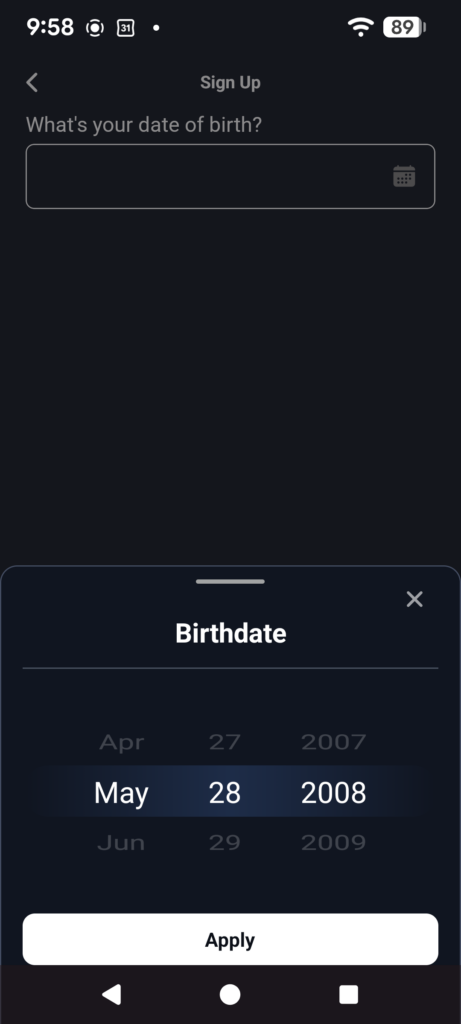
Use the wheel picker to set your birthdate and then tap Apply. Tap Next when ready.
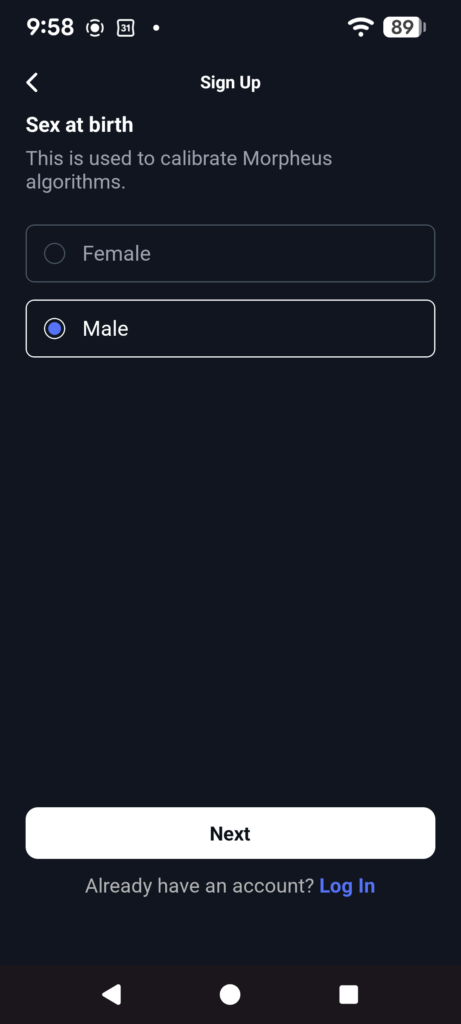
Select your sex at birth. Tap Next when ready.
You’ll see a short spinner while your account gets set up.
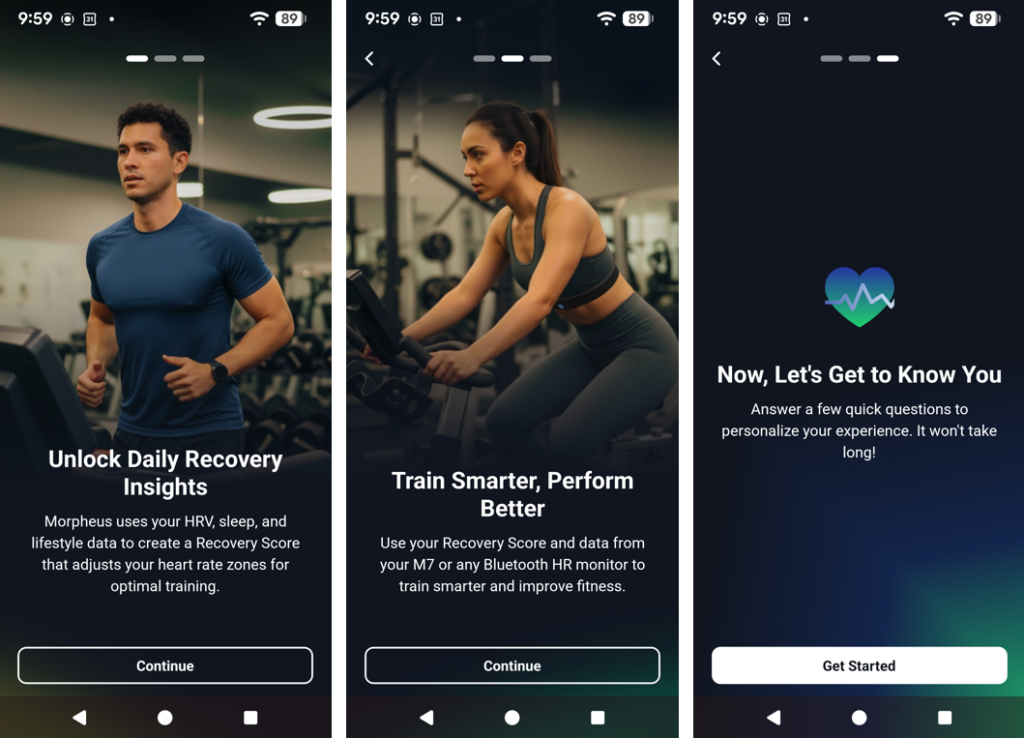
Next it’s time to tell Morpheus more about yourself so that your experience can be more personalized. Tap Continue on the first two screens and then tap Get Started when ready.
Create your profile
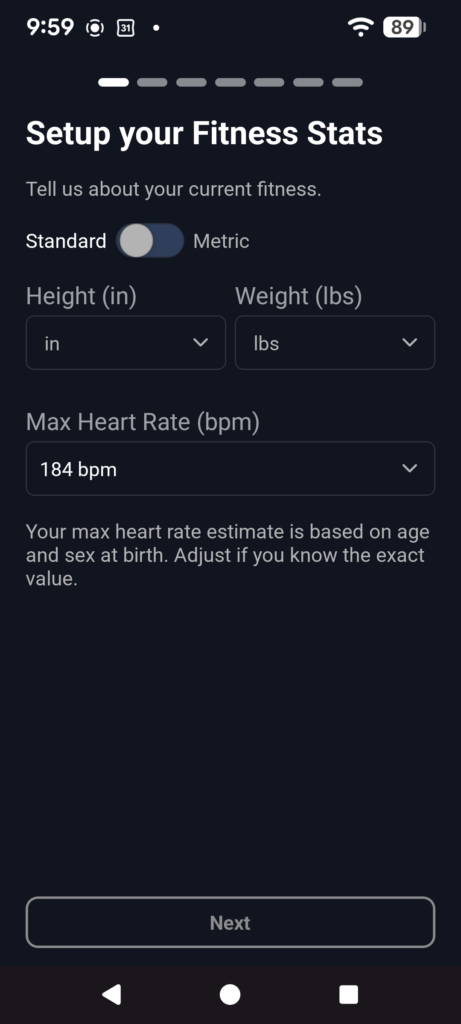
Start by entering your current height and weight. You can select between standard and metric.
If you know your max heart rate, enter it into the field. If you don’t know what it is, leave it blank and Morpheus will estimate it for you.
Note: For most people, a reasonable Max HR estimate combined with the Morpheus 3 dynamic heart rate zones provides more than enough accuracy. However, your most accurate Max HR comes from a properly conducted maximal effort test, either in a lab or through your own testing. For more info on measuring max HR, check out this article.
Tap Next when ready.
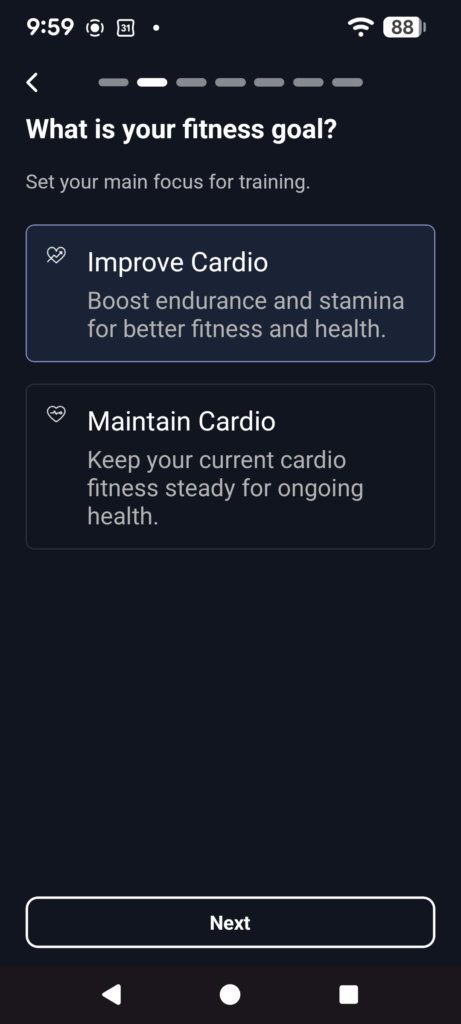
Then choose your fitness goal as it relates to cardiovascular fitness.
Select, “Improve Cardio” if you want to train to increase your cardiovascular fitness.
Select, “Maintain Cardio” if your goal is to build strength or a different area of fitness while maintaining your cardiovascular fitness.
This setting will be used to help determine your weekly cardio targets.
Tap Next when ready.
Choose your primary reason for selecting this fitness goal.
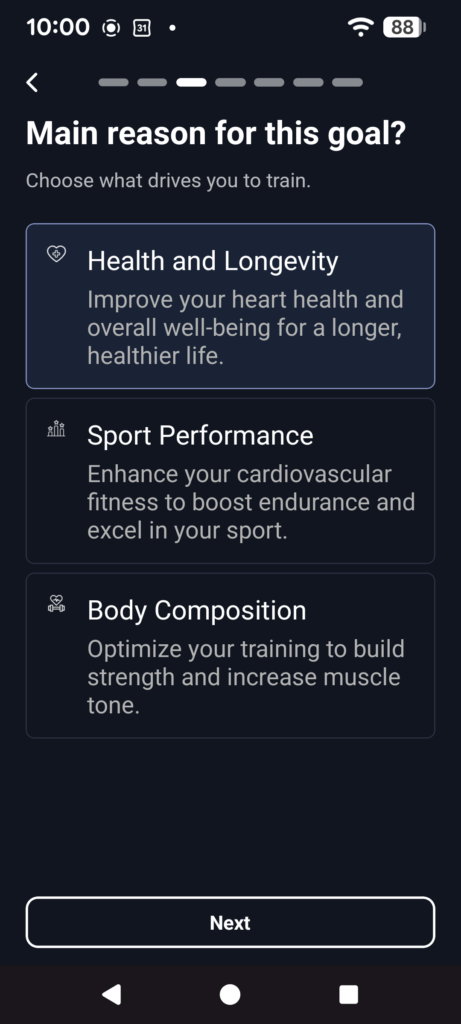
Tap Next when ready.
Choose what role in fitness best describes you.
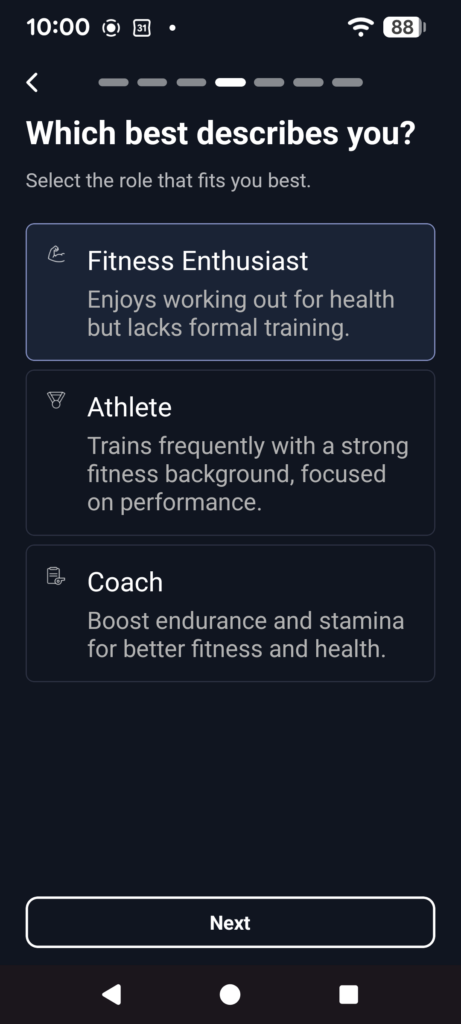
Tap Next when ready.
You will need to estimate your cardio fitness level – low, moderate, or high. This doesn’t necessarily need to be based on objective data nor does it need to be you compared to other people. Just think about yourself now compared to your fitness in the past or where you want your fitness to be in the future.
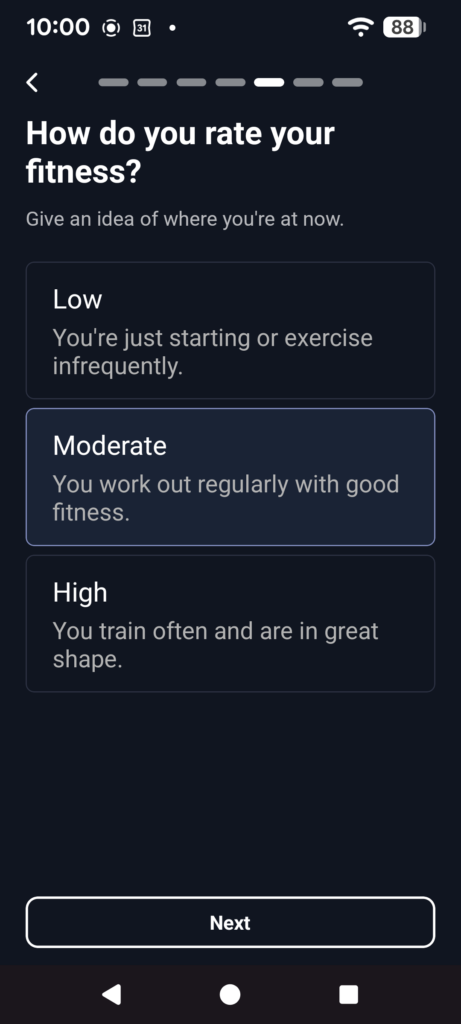
After you begin using Morpheus, you can also adjust the fitness setting based on your average HRV and Resting HR (RHR).
A general guideline is to select “low” for avg HRV below 70 and avg RHR is 60-70; “moderate” if avg HRV is 70-80 and avg RHR is 50-60; and “high” if avg HRV is 80+ and avg RHR is in the low 50s or below 50.
You can also adjust your max heart rate and cardio goal at any time by going back into the Fitness Stats through the main menu of the app.
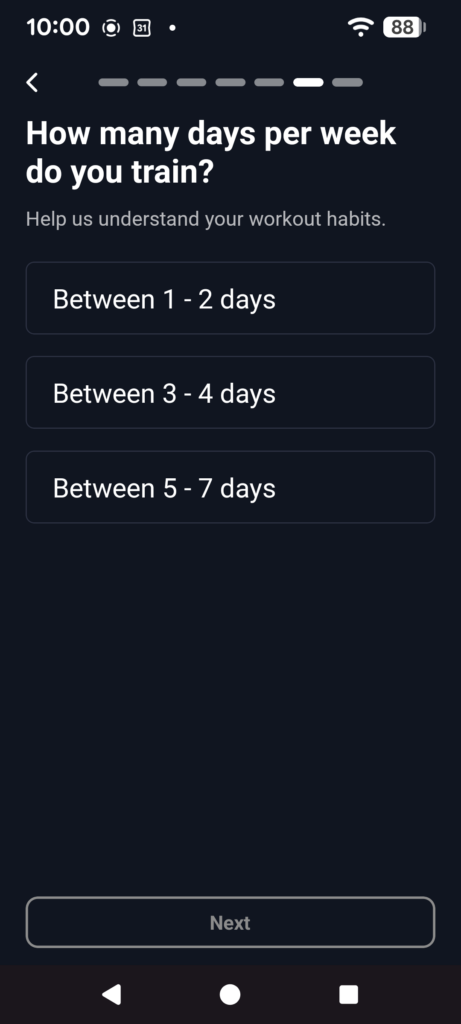
Next, choose how many days per week you currently exercise (or plan to when starting to use Morpheus). Tap Next when ready.
Setup your activity and sleep tracking
The final (optional) step is to connect any third party trackers that you want to use for daily sleep hours and daily steps taken to Morpheus.
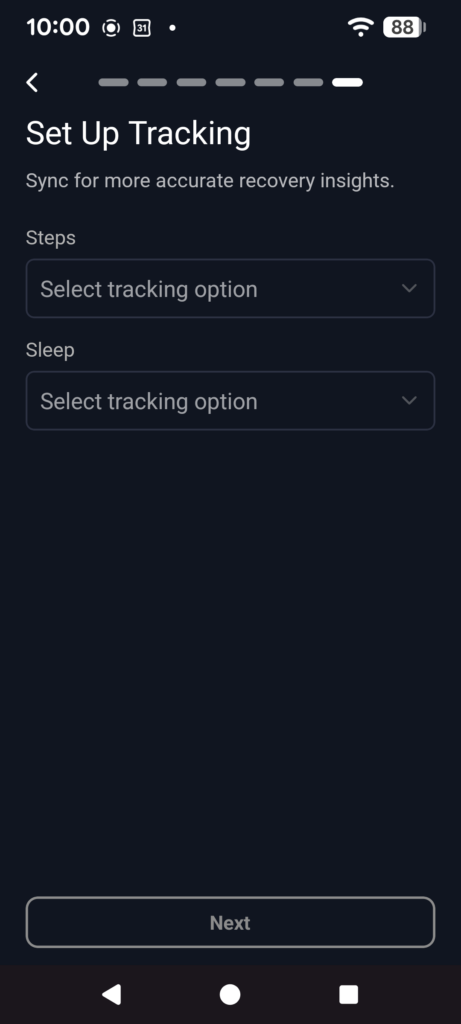
Note that 3rd party trackers are NOT required to use Morpheus effectively, but if are using one, then adding the data into Morpheus will help give Morpheus the most complete picture of your stress and recovery.
If you are using a Fitbit or Garmin device, you will be asked to login to your account to authenticate your account after it’s selected.
If you are using a different device that sends sleep and/or activity data to Health Connect (Android) or Apple Health (iOS), then select this option and Morpheus will take care of the rest.
Finally, you can select “none” or “manual” if you do not want to connect any trackers or use your phone’s internal activity tracker. You will still be able to manually enter how many hours your sleep each night when you take your recovery test. Steps cannot be manually entered.
For more detailed information about tracking sleep and steps with 3rd party platforms, please visit the link below.
Your account has now been completely set up and you are ready to start using Morpheus.
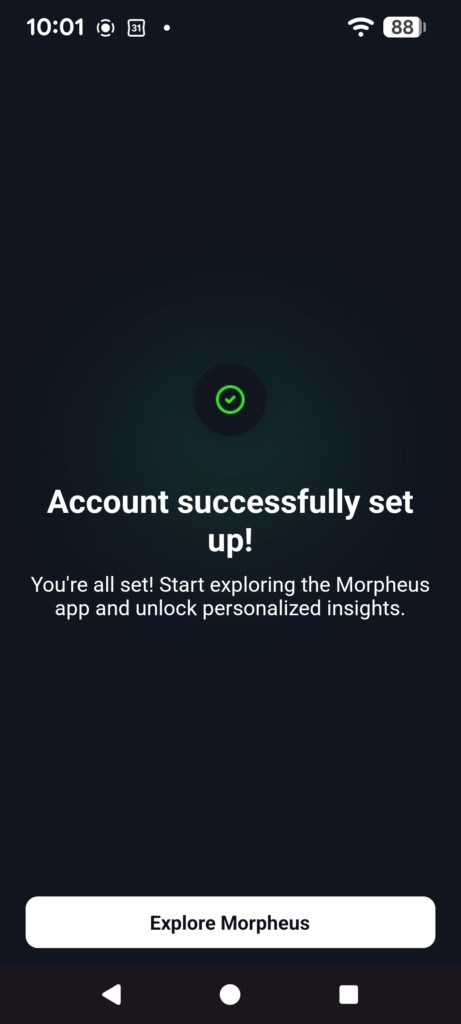
Tap Explore Morpheus to be redirected to the main daily home screen of the app.
If you have not yet fully set up your M7 heart rate monitor, that is your next step. (insert link here)
If you have fully set up your M7, then your next step is to learn about the Recovery Test process. (insert link here).
Note: When you’re not using the Morpheus app for anything, it’s best to have it completely closed and not just open on your phone in the background. Then each time you want to use Morpheus, open the app and the data will refresh/reload and you’re good to go. The app does not log you out unless you choose to logout within the Menu area.